A pocket notepad is a small writing pad that can fit in a pocket, purse, or bag. It lets you capture notes, reminders, and quick ideas wherever you are. Even with phones in every hand, many people still reach for one every day. Typing feels slow when you just need to write something down fast. A small notebook sits within reach and asks for nothing more than a pen. Choosing the right one is not as simple as grabbing the first pad you see. Size, paper, and binding all affect how comfortable it feels to use. This guide walks you through what to look for so you can pick an option that fits your daily routine.
What Is a Pocket Notepad?
It is a small writing pad, usually under 4 by 6 inches, made to slide into a coat pocket, bag, or glove space. It holds fewer pages than a standard notebook and skips extra features like dividers or storage pockets.
The main difference from a full-size notebook comes down to purpose. A standard notebook suits a desk and long-form notes. A smaller pad works best for short intervals of writing, like a phone number, a task, or a quick sketch.
People use these small pads for grocery lists, meeting notes, mileage logs, and ideas that show up at random moments. Handwriting still beats typing for speed here, since there is no screen to unlock and no app to open.
If you want to compare formats first, our guide to types of writing pads breaks down how pads, notebooks, and notepads differ in structure and use.
Why Do People Still Use a Pocket Notepad?
Phones are fast, but paper still wins in several everyday situations.
- During a phone call, you can write down a name or number without switching screens.
- In meetings, jotting a note takes one motion, not several taps.
- While shopping, a paper list survives a dead battery.
- In class or in the field, sketches and diagrams come out faster by hand.
- While traveling, a small pad slips into a jacket pocket without adding weight.
There is no battery to charge and no notification to pull your focus away. Our post on the benefits of writing by hand covers why this habit remains around even in a digital age. The right pick still depends on how you plan to use it, which is where the different types come in.
What Types of Pocket Notepads Are available?
The best pocket notepad depends on how you’re going to use it. There are many types, and it’s important to understand what each one has to offer before comparing sizes or features.
Spiral Pocket Notepad
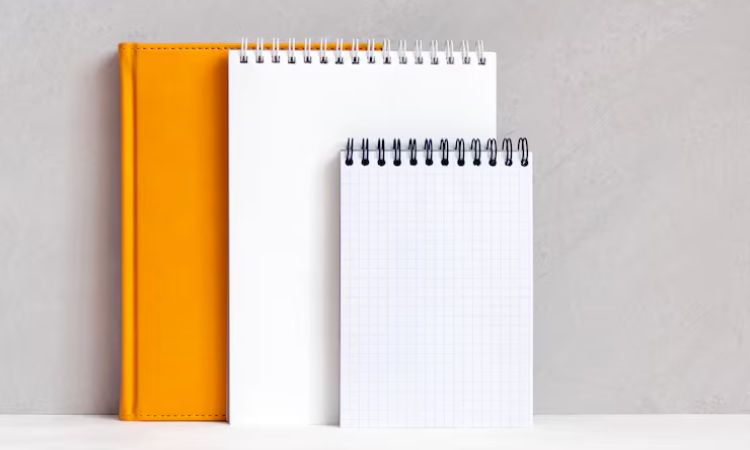
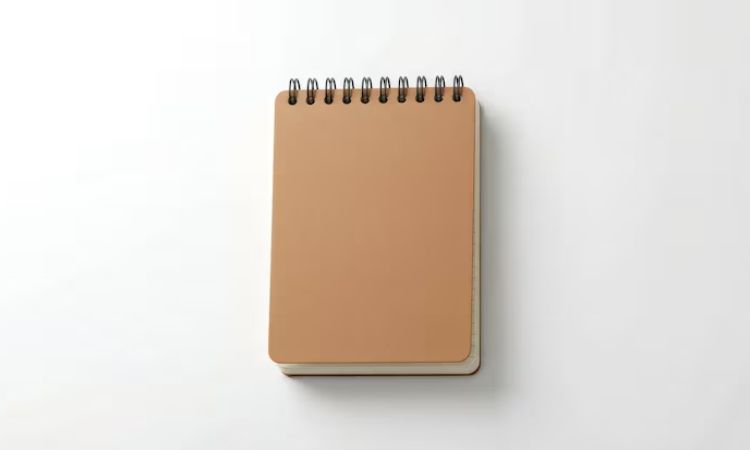
A spiral pocket notepad has a coiled wire binding that allows pages to lie flat and tear out easily. This style suits students and anyone who takes fast, frequent notes. The wire can occasionally get stuck on a bag, so keep that in mind for daily carry.
Leather Pocket Notepad
A leather pocket notepad wraps a refillable paper insert in a durable cover. It looks polished in a client meeting and holds up to years of daily use. Many versions accept a fresh paper insert once the old one runs out, which makes them a longer-term buy. Lawyers and consultants often prefer this style because it doubles as a small accessory. For a similar premium feel with more room to write, see our leather legal pads.
Stapled, Glued, Hardcover, and Softcover Notepads
A stapled pad is light and low cost, ideal for short-term use. A glued pad, often called a memo pad, tears off one sheet at a time. Hardcover versions protect pages inside a bag, while softcover options save weight for travel. Each style trades portability against durability, so the right pick depends on how roughly you handle it day to day.
How Do You Choose the Right Pocket Notepad?
The right choice depends on five things: size, cover material, paper layout, binding style, and intended use.
What Size Fits Your Needs?
Common sizes are A7, A6, 3 by 5 inches, and 3.5 by 5.5 inches. The smallest sizes fit in a shirt pocket, ideal for students and travelers who need something small. The larger formats give professionals more space. Our legal pad size guide compares common dimensions if you want extra writing space in a similar format.
Which Cover Material Should You Choose?
Paper covers keep costs low but wear out fastest. Softcovers bend comfortably in a back pocket. Hardcovers protect pages from bends and folds inside a bag. Leather is more durable and looks professional, but has a higher initial cost.
Which Paper Layout Works Best?
Ruled paper is nice for notes and to-do lists. Many engineers like to use grid paper. It is useful for diagrams and for making measurements. A dot grid provides you with structure for bullet journaling, but with no heavy lines. Use plain paper for freehand sketching.
Which Extra Features Are Worth Paying For?
A pen loop keeps a pen attached so you are never caught without one. Perforated pages let you tear off notes cleanly to hand to someone else. An elastic closure keeps the pad shut inside a bag. Refillable inserts extend the life of a leather cover well beyond the first set of pages. Weigh these features against your budget rather than paying for every option available.
Pocket Notepad vs. Pocket Notebook: What Is the Difference?
When comparing their features, you can easily decide which one suits your daily routine and writing needs.
| Feature | Pocket Notepad | Pocket Notebook |
| Typical pages | 20 to 50 | 60 to 200 |
| Portability | Very high | High |
| Writing style | Short notes, lists | Longer entries, journaling |
| Best use | Quick capture on the go | Sustained note taking |
| Binding | Spiral, stapled, or glued | Sewn or stitched |
The smaller pad works best for short, frequent notes you plan to act on quickly. A notebook suits someone who wants one place to keep longer entries over weeks or months. If you write in short bursts throughout the day, the smaller option is the more practical pick.
Which Pocket Notepad Is Best for Different Needs?
The best pocket notepad for you will depend on what you want it for. Here are some other ideas for requirements.
| User | Recommended Style | Why |
| Student | Spiral style | Pages tear out cleanly for quick reference |
| Lawyer | Leather style | Professional look with refillable inserts |
| Sales representative | Pocket size option | Fits in a jacket for client visits |
| Traveler | Mini style | Lightweight and easy to pack |
| Engineer | Grid notebook | Supports diagrams and measurements |
| Everyday carry | Small option | Balances size with enough pages |
More often than not, there isn’t just one product that’s the best fit. It is whichever option matches how you actually work each day. If you need more writing room while staying portable, our small legal pads give you extra space without losing that pocket-friendly size.
What Mistakes Should You Avoid When Buying One?
Even a good pocket notepad can disappoint if you choose the wrong one. Avoid these common mistakes before you buy.
- Choosing the wrong size: too small feels cramped; too large defeats the point of a compact pad.
- Ignore paper quality: Thin paper bleeds through and ruins the next page.
- Buying unnecessary features: a ribbon bookmark adds little value if you use loose notes.
- Wrong choice of binding: a stapled pad will not withstand daily rough handling.
- Forgetting portability: a bulky cover defeats the purpose of a small notepad.
- Not matching the notepad to its purpose: a grid layout helpful for mainly write lists.
When Does a Custom Pocket Notepad Make Sense?
Businesses often order custom notepads for conferences, trade shows, and client meetings. A logo on the cover keeps a company name in front of clients long after the event ends. Our custom legal pads walk through logo printing options for branded stationery.
Custom pads also work well as employee welcome kits or small corporate gifts. Our personalized legal pads option gives a similar branded touch for staff onboarding or client giveaways. For any organization that hands out promotional items regularly, this adds a practical, low-cost option to the mix.
Conclusion
Start by identifying how you actually plan to use your pocket notepad each day. Compare size, cover material, paper layout, and binding before you commit to one option. The feature selection should be based on your daily activities instead of focusing on more features that are not useful for you. A good notepad helps you to stay engaged and keep your important notes at your fingertips.
FAQs
What size is a pocket notepad?
Most measure between 3 by 5 inches and 3.5 by 5.5 inches, small enough to fit in a shirt or jacket pocket without adding weight.
Is a pocket notepad the same as a pocket notebook?
No. They are both different from each other because the pocket notepad is smaller and has fewer pages compared to the notebook.
Is a leather pocket notepad worth buying?
A leather pocket notepad is definitely worth buying if you want an analog companion to journal with that gets better with age and keeps your pages safe.
Is a spiral pocket notepad good for everyday use?
Yes, a spiral pocket notepad is good for repeated use because it lies flat easily, and you can write notes simply.