Many workplaces rely on digital tools today, but printed documents still play a major role in everyday office work. Contracts, reports, research drafts, and legal files exist on paper. These documents need a simple and reliable way to stay organized during or after work hours. This is where binder clips continue to play an important role. These clips hold stacks of paper together without damaging the pages. They also allow you to remove or rearrange sheets easily, which makes them useful for projects, document reviews, and printed reports.
Their continued relevance is reflected in market growth. The global market size is expected to reach US$ 1.3 billion in 2026 and may grow to US$ 2.0 billion by 2033, with a projected CAGR of 5.1 percent during the forecast period.
A binder clip is a simple device used for binding sheets of paper. Most binder clips are made of tempered steel, which makes them durable. With the rise of digital tools, this practical design still helps modern office workflows. This blog will help you to understand why binder clips are still a must-have office tool in 2026. You will learn and understand how they help manage documents, the different types available, and how to choose the right binder clip size for your work.
What is a Binder Clip?
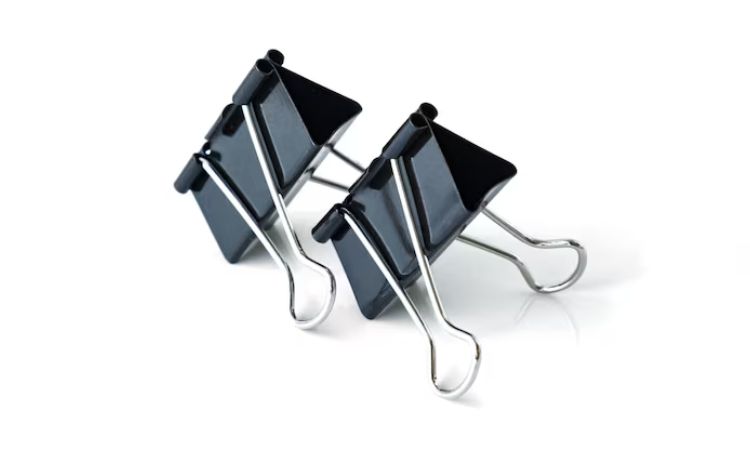
A binder clip, also known as a foldback clip, paper clamp, banker’s clip, foldover clip, bobby clip, or clasp, is a small and simple reusable tool used to hold and secure sheets of paper together without puncturing them. It comes in a V-shaped spring steel clip with two wire handles that open it and is ideal for holding documents, organizing cables, and other DIY projects.
Most clips, also known as paper binder clips, are made from tempered steel. This material creates tension, which allows the clip to hold thick stacks of paper. Clips come in several forms, including metal binder clips and plastic binder clips. Metal provides a stronger grip for a group of papers. Because of this simple and durable design, these clips remain one of the most practical tools for organizing paper documents in offices and workspaces.
Why Binder Clips Remain Essential Office Tools in 2026
Binder clips continue to support daily office work because they solve simple document problems. They keep papers secure, allow quick changes to files, and help maintain order during document handling, and they keep the documents arranged after working hours. The given reasons explain why these clips remain a must-have office tool in 2026.
Secure Papers Without Damaging
These clips hold documents together without punching holes in the pages. This makes them useful when files require edits or updates. A clip can be removed, pages can be adjusted, and the clip can be attached again without harming the document. Common examples include:
- Contracts under review
- Printed reports
- Project files
- Draft documents
Hold Thick Stacks of Paper
These clips provide a strong grip that keeps papers aligned. Large binder clips can hold thick bundles of documents such as reports, meeting materials, and printed presentations. This stronghold prevents pages from slipping or mixing with different files.
Durable and Reusable Tool
Most metal binder clip designs use tempered steel. This material creates strong tension and resists rust. Because of this design, a binder clip can be reused many times. Offices keep the same clips in use for a long time without replacing them.
Help Organize Documents During Work
Binder clips help organize documents during daily work. They keep paperwork arranged and easy to handle. Teams use them to group related pages together, separate sections in reports, keep printed drafts ready for review, and manage document bundles.
Support Desk Organization
These clips also help maintain a clean workspace when used with simple desk tools, such as a pencil holder, and keep writing tools organized and easy to reach during work.
How Binder Clips Improve Document Management
Binder clips help the team to manage documents and keep them easy to handle during work tasks, and provide a simple way to keep papers and files clear and organized during daily work.
- Organize related papers: Binder clips are useful to separate the pages and other things in the same file or folder, and teams use them to keep reports in the correct order for group meetings and for other purposes.
- Allow quick document updates: Documents may change or be damaged during editing or review, but these clips allow pages to be removed or added without damaging the paper. You can remove a page for correction, insert new pages, or rearrange document sections when needed.
- Manage printed pages during review: Printed pages can become mixed during editing or printing. These clips keep pages aligned and easy to handle. Teams use them to hold printed drafts together, separate document copies, arrange pages before final binding, and keep printing batches organized.
- Provide temporary document binding: These clips also serve as a temporary way to hold documents together when permanent binding is not required. They help secure draft reports, internal documents, student assignments, and working project files, and they allow changes during document preparation.
Modern Uses of Binder Clips in Offices and Workspaces
Binder clips are not used only to hold paper; they help in many tasks in modern workspaces and solve simple problems that appear during daily work, such as helping to organize a desk and working as multifunctional tools.
- Manage desk cables: A binder clip can also help to manage desk cables. People attach a clip to the edge of a desk and pass the charging cable or headphone wire through it. This keeps the cable in place and stops it from falling behind the desk.
- Hold notes and reminders: Binder clips help hold notes and reminders in one place for the team. Teams use them to keep reminder notes, printed schedules, or small paper slips together so they can find them easily when required. Many teams also use custom sticky notes along with these clips to keep reminders, quick instructions, and important notes visible on desks or documents.
- Support simple device stands: Clips can also support simple device stands. Two clips placed together can hold a phone upright during video calls or online meetings. This keeps the screen visible while you work.
- Keep important pages visible: A binder clip helps hold a reference page open on a desk. People use them to secure papers on clipboards, hold printed pages in place, or keep notes visible during meetings.
Types of Binder Clips Used in Offices
There are many types of clips available, and they differ from each other by material and size. The table below shows common types of binder clips and how they are used in offices.
| Type of Binder Clip | Uses For |
| Large | Reports, project files, and printed presentations |
| Mini | Notes, small files, and receipts |
| Micro | Labels, small notes, and light paper bundles |
| Metal | Large stacks of office documents |
| Plastic | Desk notes, short documents, and light paper sets |
Binder Clip Sizes Explained
These clips come in different sizes to handle different numbers of pages. The correct size helps keep documents secure and stops the clip from damaging the paper edges. Small clips work well for short notes, and larger clips hold thick document bundles used in offices and schools.
The size of a binder clip is measured in millimeters. This measurement refers to the width of the clip when it is closed.
Binder clip size chart:
| Binder clip size | Paper capacity | Common use |
| 19 mm | Small paper bundle | Notes, receipts |
| 25 mm | Medium | Office documents |
| 32 mm | Standard | Reports and drafts |
| 41 mm | Large | Project files |
| 51 mm | Extra-large | Archive documents |
Where Can You Buy Binder Clips
Many options are available to buy binder clips for offices, schools, and for personal use, but the best option depends on how many clips you require quickly.
Office supply stores: Many local suppliers sell different clips near you with different sizes and different types, like mini, medium, and large clips. This buying option is good if you do not buy a large quantity.
Online stationery websites: Many online stores sell different sizes and materials and offer many options. You can easily compare different sellers, like prices and sizes, and choose the option that suits your requirements.
Bulk office suppliers: Companies that need large quantities buy bulk binder clips from wholesale suppliers. Bulk packs cost less and ensure offices always have enough clips for documenting their work.
Conclusion
In today’s workplaces, binder clips are still useful. Even with the growth of digital tools, many documents still exist in printed form. Reports, contracts, and project files need a simple way to stay organized without damaging the pages, and these clips provide that solution. Their strong grip, reusable design, and ability to hold thick stacks of paper make them useful for everyday office work. Teams can secure documents, update files during review, and keep printed pages arranged during meetings or printing tasks.
These clips also support desk organization and other small tasks in workspaces. From holding notes together to managing cables, their simple design allows them to serve multiple purposes. Because of their durability, ease of use, and practical design, clips remain a reliable office tool. In 2026, they continue to help professionals manage documents and keep workspaces organized. Clips are helpful with other office supplies, such as custom stationery, which helps teams maintain organized desks and structured document workflows.
FAQs
When did binder clips become popular?
Binder clips were widely used in offices during the twentieth century. The modern design was introduced in 1910 by Louis E. Baltzley. Offices used it because the clip could hold stacks of paper easily.
Are binder clips better than paper clips?
Binder clips offer a better grip with more durability than paper clips, and paper clips are useful for small bundles of paper. These clips can hold thicker document stacks and keep the pages aligned.
What is the purpose of a binder clip?
The main purpose of a clip is to hold sheets of paper in a group without stapling them and to organize reports, contracts, notes, and other printed documents.
What to do with old binder clips?
Old binder clips are useful for many tasks, like organizing cables, sealing food bags, marking pages in books, holding notes, DIY phone stands, and hanging posters or art without damaging walls.