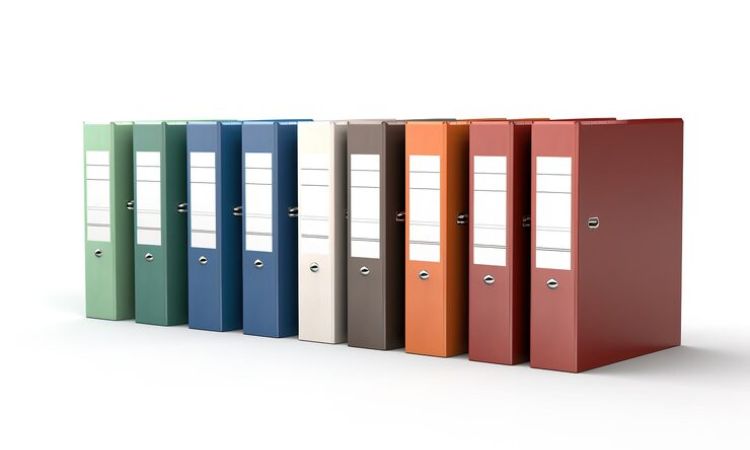
Keeping documents organized gets difficult as files grow. You spend more time searching, and important papers get mixed up or misplaced. This problem shows up in offices, legal work, and even at home. File folder dividers help solve this by breaking documents into clear sections. They let you group related papers, label them properly, and find what you need without going through the entire folder. This simple system saves time and keeps your workflow structured.
This guide will teach you what file folder dividers are, the different kinds that are available, and how each one is used in real life. You will also learn how to pick the right divider for your needs so that your filing system is easy to use.
What are File Folder Dividers and How do They Work?
File folder dividers are sheets that go inside a folder to separate papers into different sections and keep them organized by category, topic, or according to a different purpose. Each divider has a label on it that separates groups of documents, making it easy to follow. This makes it easier to keep track of both small and large groups of files. You can use dividers for files and folders to group things like bills, reports, or client records. Instead of flipping through every page, you go directly to the section you need. This improves speed, reduces errors, and keeps your documents in order over time.
What are the Main Types of File Folder Dividers?
File folder dividers help you keep your papers in order, and you can find them easily whenever you want. The best type depends on how you keep, get to, and organize files in your daily life. Choosing the right type based on your workflow will speed up and improve accuracy. Here are the types that are most useful and how to use them in real life.
Alphabetical File Dividers
Alphabetical file dividers organize documents from A to Z based on names or categories, making a system so you can find files without scanning the entire folder. You can use them to keep track of clients, employees, or contacts that you need to get to quickly. Each section represents one letter; that’s why it helps you to handle large volumes of documents in an organized and efficient way.
Legal File Dividers
Legal file dividers support longer documents that follow legal-size formats. They fit properly inside legal folders and keep papers flat without folding or damage, and are useful for contracts, agreements, case files, or official records. This type works best in professional environments where maintaining proper format is important.
Metal File Dividers
Metal file dividers are built for strength and long-term use. They handle large stacks of documents without bending or losing shape, even with frequent handling. You can use them in filing cabinets, high-volume storage systems, or busy office setups where durability is important.
Custom File Folder Dividers
Custom file folder dividers allow you to customize them according to your needs, and you can add colors, labels, or branding. They are excellent for business presentations, filing by department, or branded document systems where things need to be the same. You can also pair them with custom legal pads to maintain professional workflow across your documents.
Tabbed File Folder
Tabbed file folder dividers have tabs that you can see to help you find sections. You can use them to keep track of reports, manage projects, or organize study materials. Many people use this type because it combines easy labeling with quick and easy access.
How are File Folder Dividers Used in Real Life?
File folder dividers help you organize documents based on how you handle them in daily tasks. You can sort, access, and update files without confusion. They are so valuable when you deal with multiple documents and manage them.
Office and Business Use
In offices, file folder dividers create clear sections for teams, projects, and departments. This folder helps you manage daily work without wasting time. You can separate project files by stage or priority; organize department records like finance or HR; and structure reports or invoices. This system makes sure that workflows run smoothly and that overall output goes up.
Legal and Professional Use
Legal and professional documents must be organized so that they are simple to find. File folder dividers help you organize complicated files into clear sections. This keeps each document in its proper place. You can sort case files into notes, evidence, and agreements. They also go well with a legal pad portfolio, which is a clean way to keep your notes and papers all in one place.
Personal and Academic Use
It’s easy to keep track of your personal and school papers with file folder dividers. You can keep your study notes, assignments, bills, and important papers in order so that you can find them when you need them. This system is excellent for students and home use, where you need to get things done quickly. You can also use grid letter pads with them to keep your notes organized and in line with your documents.
What is the Difference Between Types of File Folder Dividers?
File folder dividers come in different types for different uses. It’s easier to pick the right one for your needs when you can look at them side by side.
| Type | Best for | Key benefit |
| Alphabetical file dividers | Large record systems | Quick file lookup |
| Legal file dividers | Legal-size documents | Proper size fit |
| Metal file dividers | Heavy storage | Strong and long-lasting |
| Custom file folder dividers | Business use | Personalized organization |
| Tabbed file folder dividers | Daily use | Easy navigation |
This comparison helps you find the right divider for your filing system, which will keep your papers organized and easy to find.
How do you Choose the Right File Folder Dividers?
The best file folder dividers for you depend on how you keep, get to, and organize your papers. The right choice helps you keep your system organized over time.
Document Size
First, check how big your files are. You need legal file dividers for longer documents and regular dividers for regular papers. Using the right size keeps papers from bending and files in the right order.
Material Type
The material affects how long the dividers last. Paper dividers are suitable for light use, while plastic offers more flexibility. Metal file dividers provide the highest durability for heavy storage. Choose based on how often the files are handled and how much weight they carry.
Purpose of Use
Different tasks need different kinds of dividers. Alphabetical file dividers are good for organizing big records, and tabbed dividers make it easy to find your way around. Choosing the right divider type for your workflow makes things run more smoothly and cuts down on confusion.
Labeling and Organization
Any filing system is easier to use when the labels are clear. Dividers with tabs that are easy to see or labels that can be changed make it easy to find sections. A system with clear labels saves time and makes it easy to find documents without having to search through them.
What Supplies Work Best with File Folder Dividers?
File folder dividers work best when the base system is simple and consistent. A few supporting tools can make your setup more reliable and easier to manage. A manila folder gives structure to your documents. It keeps all sections in one place and avoids loose papers from shifting. This makes your divider system stable and easier to maintain. When documents need to remain readable and clean over time, sheet protectors come in handy. They are helpful for documents that must be kept undamaged or that are handled frequently. A legal pad portfolio keeps notes and documents together in one place. This is helpful when you need quick access to both written points and related files during meetings or work.
What are the Benefits of Using File Folder Dividers?
File folder dividers improve how you handle documents by making your system easier to manage and maintain.
1. Dividers create clear sections, so you go directly to the right category instead of searching through the entire folder. This reduces the time spent finding files.
2. When documents increase, folders become harder to manage. Dividers break them into smaller sections, which keeps everything structured and easier to handle.
3. A well-divided folder prevents mixing of unrelated papers. This keeps your work clear and reduces confusion during daily tasks.
4. Adding or removing documents becomes simple because each section is already defined. This helps you keep your filing system organized without starting over.
Conclusion
A good filing system depends on how easily you can manage and access your documents. File folder dividers help you create that control by keeping everything clearly separated and easy to handle. The key is to choose a setup that matches your daily work. When your sections are clear and consistent, you spend less time searching and more time getting things done. Start with something simple, make sure your structure is clear, and change it as your files get bigger. A system that is well-organized will keep working for you without needing to be changed all the time.
FAQs
What are the different types of folder dividers?
The main types include alphabetical file dividers, legal file dividers, metal file dividers, custom dividers, and tabbed dividers. Each type is designed for a specific way of organizing and accessing documents.
What are the different types of file folders?
Common file folders include manila folders, hanging folders, expanding folders, and file pockets. Each type is used based on storage needs and the volume of documents.
What is the difference between 1/3 cut and 1/5 cut tabs?
The difference is in tab placement. 1/3 cut tabs divide the folder into three sections, and 1/5 cut tabs divide it into five sections.
What are the four types of folders?
The four common types are Manila folders, hanging folders, expanding folders, and classification folders. Each type supports a different level of organization and storage.