Ever notice how the best ideas show up at the worst possible moments? You’re in the shower, or driving, or half asleep, and suddenly there’s a thought worth keeping. By the time you unlock your phone, open an app, and type it out, half of it’s gone. That’s the whole case for notepads in one sentence. They’re fast, they’re dumb in the best way, and notepads never ask you to update anything.
Many people assumed paper pads would disappear once smartphones took over. That didn’t happen. Sales of paper notebooks have actually held unchanged for years, and many professionals swear a pen and paper still beat typing when it comes to remembering things clearly. Notepads aren’t a treasure sitting in a drawer somewhere. They’re a working tool, and this piece walks through why, along with the types worth knowing about and how to pick ones that fit how you actually live and work.
What Makes Notepads Still Relevant in a Digital World?
Before getting into types and use cases, it helps to answer the basic question. Why would anyone reach for paper when every device in the room can take notes? The answer isn’t nostalgia. The difference lies in how the brain processes information.
Researchers at Princeton and UCLA published a well-known study back in 2014 showing that students who wrote notes by hand remember concepts better than students typing on laptops, even when the laptop notes had more content. The physical act of writing forces a kind of filtering that typing skips right away. You can’t write as fast as someone talks, so your brain has to summarize instead of record, and that summarizing is where real learning happens.
There’s also the distraction problem nobody likes saying out loud. A phone or laptop is one tap away from a notification, an email, or a scroll session that consumes twenty minutes. A blank sheet of paper sits there doing exactly one job. It waits for you to write on it, and that single purpose feels almost refreshing in a world where every device wants your attention for something else.
Different Types of Paper Pads and What They’re Best For
Not every notepad serves the same job, and honestly, that’s a good thing. Once you start paying attention, you’ll notice there’s a pretty specific format for nearly every situation, from quick reminders to formal documentation.
Small Notepads for Quick Notes
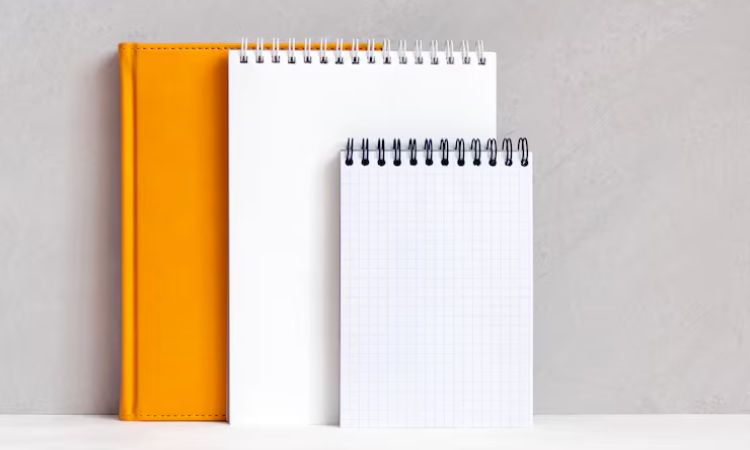
Small notepads earn their keep by being portable enough to live in a bag, a glovebox, or a jacket pocket without anyone noticing the bulk. They’re built for short moments: a grocery list or a phone number, an address someone knocks off before you can grab your phone. Nobody writes a novel on one of these, and that’s exactly the point. They’re meant for fast capture, not long-form thinking.
Legal Pads and Custom Legal Pads
Legal pads occupy a different corner of the paper world entirely. Their longer format and generous margins make them a favorite for lawyers, consultants, and anyone drafting something that needs room to think out loud before it’s typed up properly. If your work involves drafting contracts, meeting notes, or long-form outlines, browsing a set of legal pads built for that exact kind of writing is worth doing before you settle for whatever’s stacked at the office supply store.
Businesses that want their name on every page they hand out often go a step further with custom legal pads, which add a logo, a color scheme, or branded letterhead to the standard format. It’s a small detail, but clients notice it, and it makes a legal pad feel less like scrap paper and more like part of the service you’re providing.
Custom and Personalized Notepads
Then there’s the category built around identity rather than function. Custom and personalized pads let a business or an individual put their name, brand, or design on something people will use daily, whether that’s a desk pad for the office or a small gift item for clients. A well-designed custom letter pad option, for instance, works especially well for firms that send a lot of written messages and want every page to look consistent and professional.
Gift-focused buyers prefer to focus on cute designs with playful covers or fun illustrations, since a pad someone actually enjoys looking at gets used far more than a plain one stored in a drawer.
The Everyday Benefits of Keeping One Nearby
It’s easy to treat a notepad as an accessory, something you grab without thinking. But there’s a real, practical case for keeping one on the desk, and it goes beyond simple habit.
1. They capture ideas instantly: No app to open, no login, no loading screen. You pick up a pen and start writing.
2. They reduce screen tiredness: After a full workday staring at monitors, writing a note by hand gives your eyes a genuine break.
3. They’re always reliable: Paper doesn’t crash, run out of battery, or need a software update in the middle of a meeting.
4. They improve focus: Writing by hand tends to slow the brain down just enough to actually think through what’s being written, rather than typing on autopilot.
5. They’re easy to organize physically: A stack of used pages can sit on a shelf or in a drawer, searchable by flipping through, which some people genuinely prefer over looking through folders on a laptop.
None of this means digital tools are useless. It just means paper still earns its spot on the desk, especially for the kind of quick thinking that doesn’t need to live forever in the cloud.
How to Choose the Best Notepads for Your Needs?
Picking notepads sounds simple until you’re standing in front of a shelf full of options, unsure what actually matters. A few practical questions make the decision much easier.
Start with size. Small pads make sense for quick capture, while a full-size legal pad suits longer writing sessions like meeting notes or drafts. Then think about paper quality, since thin, low-weight sheets tend to bleed with certain pens and feel flimsy under a heavy hand. If you write with fountain pens or thicker markers, a slightly heavier stock avoids the frustration of ink soaking through to the next page.
Branding matters too, particularly for businesses handing pads out to clients or using them internally. A generic option works fine for personal use, but anyone looking to build a bit of recognition should consider a personalized notepad option that carries a logo or consistent color scheme across every page.
For anyone comparing options across formats and price points, it’s worth checking a curated list of best notepads rather than grabbing the first pack you see, since quality and paper weight can vary a lot between brands that look nearly the same on a shelf.
Where These NotePads Show Up: Work, Home, and Creative Life
Once you start looking, these show up in nearly every part of daily life, and each environment appears to favor a slightly different format. At the office, legal pads and branded pads dominate meetings and client-facing work. At home, small pads handle grocery lists, reminders, and the occasional note stuck to the fridge. Creative types often prefer cute or personalized options for sketching ideas, journaling, or brainstorming, since something that feels personal is more likely to actually get filled up instead of sitting untouched.
Students still rely on paper pads too, especially for the kind of active note-taking that research keeps linking to better retention. A cheap stack of paper, it turns out, still beats a lot of expensive software when the goal is simply remembering what was said in class.
Conclusion
Paper pads never really went anywhere. They stuck around because they solve a problem technology hasn’t fully replaced, which is capturing a thought the moment it happens without friction, screens, or distractions getting in the way. Whether that means a small pad stored in a bag, a legal pad on a lawyer’s desk, or a personalized option handed out as a client gift, the format keeps proving itself useful across work, school, and everyday life. Pick the type that fits how you actually think and write, and it’ll earn its spot on your desk the same way paper has for decades.
FAQs
Are notepads still useful now that most people take notes on their phones?
Yes. Writing down ideas on a paper pad is faster than unlocking a phone and opening an app, too. There’s research that shows that you retain information better when you write it down versus when you type it.
What’s the difference between a legal pad and a regular notepad?
Legal pads are longer with wider margins for drafting, outlining, and writing in detail, while a regular pad is usually smaller and for quick, short notes.
Do personalized notepads work well for business gifts?
Yes. A personalized option with a logo or name gets used daily, keeping a brand visible in a way that’s more consistent than most one-time promotional items.
What paper quality should I look for in a good notepad?
Look for a slightly heavier stock that resists ink bleed, especially if you write with fountain pens, gel pens or markers instead of a basic ballpoint.