Open any office drawer or a student’s backpack, and you will probably find at least one paper folder filled with loose sheets. Nobody thinks much about it until it fails, until the tab tears off or the pages slide out at the worst possible moment. A good folder does something small but important; it holds your papers together and keeps them in the shape you left them in.
The tricky part is that “folder” covers a lot of ground. A teacher handing out worksheets does not need the same thing a law firm needs for a client’s case history. This guide breaks down the main types you will come across, where each one earns its keep, and how to figure out which one fits the paperwork on your desk right now.
What Is a Paper Folder?
A paper folder is a flat cover, usually made from paper or cardstock, that folds around loose documents to keep them together and protected. That is the short version, though in practice it does a bit more than that.
People reach for one any time they need to move or store papers without a binder or a filing cabinet close by. A parent might grab one for a child’s school forms. A freelancer might use one to hand a client a printed invoice. An office worker might use one just to keep a single project’s paperwork from mixing in with everyone else’s. The common thread is protection and order, so pages stay flat and nothing goes missing between one desk and another.
Why Choosing the Right Paper Folder Matters?
It is easy to treat this as a minor decision. But once you are dealing with a stack of contracts or a semester’s worth of handouts, the wrong choice shows its limits fast. A thin cover splits open under weight, a folder with no pockets lets sheets slide out the side, and a thin tab tears the first time you pull it from a drawer.
Picking the right one keeps documents in order and makes them easy to find later, which matters more than people expect when a deadline is close and a specific page has gone missing. A paper holder also protects paper from spills, dust, and the general wear of being carried around, and it leaves a better impression in a meeting than a loose stack of curling pages ever will. With that in mind, it helps to look at the actual types on offer.
Different Types of Paper Folders and Their Best Uses
Not every folder is built the same way. The differences usually depend on how the paper is held in place and how much weight it needs to carry.
File Folders
A file folder is a plain, rectangular cover with a tab sticking up on one edge, meant to stand upright in a drawer or cabinet. It is not fancy, but it is the backbone of most office filing systems because it is cheap, simple to label, and quick to use. Accountants, HR staff, and office administrators lean on these to sort paperwork by client, date, or project. If your main job is keeping a drawer of documents in order, this is usually the first thing to reach for.
Pocket Folders
A pocket folder has one or two open pockets built into the inside cover, so loose sheets slide right in without needing a hole punch. Students use these more than any other type, since handouts and worksheets pile up fast and nobody wants to punch holes in every page. Offices use them too, often to hand out brochures or forms during a meeting, and because they are light and simple, they travel well in a bag or under an arm.
Manila Folders
When most people hear the word “folder,” they think of the dark brown, stiff folder, which is a manila folder. That stiffness comes from the paper stock, which can sit in a filing cabinet for years with little handling. That makes it a natural fit for records you hardly ever touch but still need to keep, like closed accounts and old contracts.
Presentation Folders
A presentation folder is built to look good, not just to hold paper. It usually has a glossy or matte finish and a slot for a business card, and companies use it to hand over proposals or marketing materials during client meetings. If the way your paperwork looks matters as much as what is inside it, this style is worth the extra cost.
Expanding (Accordion) Folders
An expanding folder unfolds into several sections, almost like a small fan, giving you room to separate a large volume of paper into categories without needing several separate covers. Anyone juggling multiple ongoing projects or sorting receipts by month for tax season reaches for one of these instead of stacking several file folders on top of each other.
Classification (Fastener) Folders
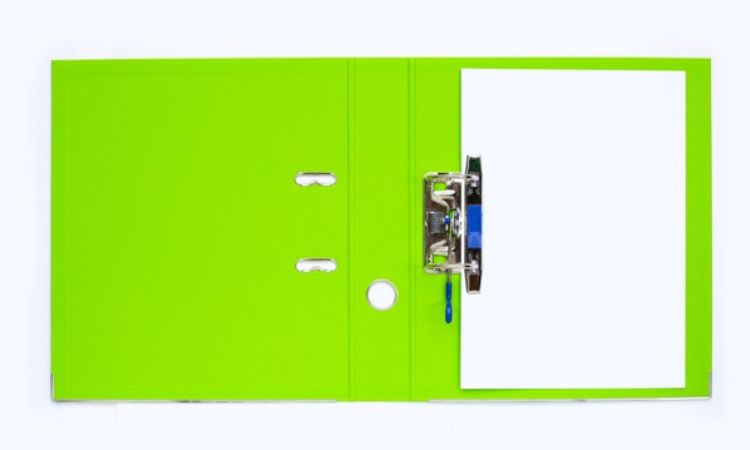
A classification folder has metal fasteners inside and multiple dividers, which keep related documents from shifting around even with frequent handling. Law firms use them for case files, medical offices use them for patient records, and HR teams use them for employee files, all cases where losing track of a single page can cause real problems.
Common Uses of Paper Folders
The types above show up in slightly different combinations depending on where you are. Here is a quick look at how each setting prefers to use them.
Offices and Businesses
Office folders hold contracts, invoices, and reports, sorted so each department can find its own paperwork without digging through someone else’s files.
Schools and Colleges
Teachers and students lean on school folders for assignments, handouts, and student records, often color coded so subjects are easy to tell the difference between classes.
Law Firms
Legal teams need covers sturdy enough to hold client files and legal documents that must stay complete and easy to pull during a hearing.
Healthcare Offices
Clinics and hospitals rely on them to manage patient records and administrative paperwork, where a missing page can slow down patient care.
Home Document Organization
At home, a folder or two keeps tax documents, warranties, and personal records together instead of being spread across kitchen drawers and old shoeboxes.
Paper Folder vs. File Folder vs. Pocket Folder
These three terms get used almost interchangeably, which causes some confusion when you are actually trying to buy the right one.
| Feature | Paper Folder | File Folder | Pocket Folder |
| Design | Basic flat cover | Tabbed, upright design | Pockets on both sides |
| Storage Capacity | Low | Medium | Medium |
| Best Use | General document holding | Cabinet-based filing | Loose sheets and handouts |
| Portability | Medium | Low | High |
Think of the first term as the broad category and the other two as specific tools within it. A file folder is built with cabinet storage in mind, standing upright with a labeled tab, while a pocket folder is built for carrying, with open pockets that hold loose sheets without punching holes. If most of your documents live in a drawer, go with the file version. If you are moving papers between locations often, the pocket style holds up better.
Paper Folder Materials and Standard Sizes
Choosing a paper folder involves more than choosing a style. The material will affect durability. The size will determine if your documents will fit properly or not. Knowing these factors, you can choose a folder that will protect your papers and suit your storage or presentation needs.
Common Materials
The material decides how long a folder lasts and how much rough handling it can take.
- Paper: Light and cheap, fine for short-term or low-volume use.
- Cardstock: Thicker and sturdier, better for covers opened and close often.
- Manila: Strong and long-wearing, a solid pick for long-term storage.
- Recycled stock: An eco-friendly choice with durability close to standard paper.
Standard Sizes
Sizing generally mirrors standard printer paper, so matching folder sizes to your documents is usually straightforward.
| Size | Best For |
| Letter | Standard office documents |
| Legal | Contracts and legal paperwork |
| A4 | International documents |
Legal-size folders run taller than the letter version, which is why law offices and anyone dealing with lengthy contracts tend to stock them by default.
How to Choose the Right Paper Folder?
Once you know the types, the decision comes down to a handful of practical questions about your paperwork.
- What type of documents will you be storing, and how many pages?
- How often will it get used or moved, and does it need to travel between locations?
- Does it need to look polished for a client, or would custom branding help?
- What budget are you working with per unit?
| If You Need | Recommended Folder |
| Daily office filing | File Folder |
| Client presentations | Presentation Folder |
| School assignments | Pocket Folder |
| Large projects | Expanding Folder |
| Long-term storage | Manila Folder |
| Legal paperwork | Classification Folder |
Match the type to the actual task first. Budget and appearance are worth adjusting for once you already know which category makes sense.
Tips for Organizing Documents with Paper Folders
A few simple habits keep any filing system working well over time.
- Label every cover clearly so the contents are obvious without opening it.
- Use color coding to separate categories such as clients, subjects, or departments.
- Keep active files apart from archived ones so old paperwork does not slow you down.
- Clear out outdated documents on a regular schedule and store everything somewhere dry.
Conclusion
The right choice depends on what you are storing and how you plan to handle it. A file folder covers most everyday office filing; a manila one suits records you will not touch for months, and a classification folder earns its place wherever legal or medical documents cannot afford to lose a page.
Look at what is actually sitting in your stack of papers, think about how often you will need to reach it, and pick the option built for that job. Once the type matches the task, staying organized stops being a chore.
FAQs
What is the difference between a paper folder and a file folder?
A paper folder is the general term for a flat document cover, while a file folder specifically has a tab and is built to stand upright in a cabinet.
Which type is best for daily office use?
A file folder tends to work best for everyday filing, since it is easy to label and slots neatly into a drawer or cabinet.
Are these covers recyclable?
Most types, including manila and cardstock, can be recycled as long as they aren’t coated in plastic or have metal fasteners attached.
Is paper folding the same thing as a paper folder?
No. Origami is a paper art and paper folding is a type of origami. Paper folding is a craft technique of paper flower folding. What we have discussed here is a physical product for arranging documents, not folding them into shapes.